Adult ADHD – Living Beyond the Label -For Health Care Professionals 2027
R2750
Many adults with ADHD remain undiagnosed or misdiagnosed. They often reach clinical practice with anxiety, depression or relationship difficulties, without anyone having recognised the ADHD beneath them. Late diagnosis is particularly common in women, in high-achieving individuals, and in people who have developed sophisticated masking strategies.
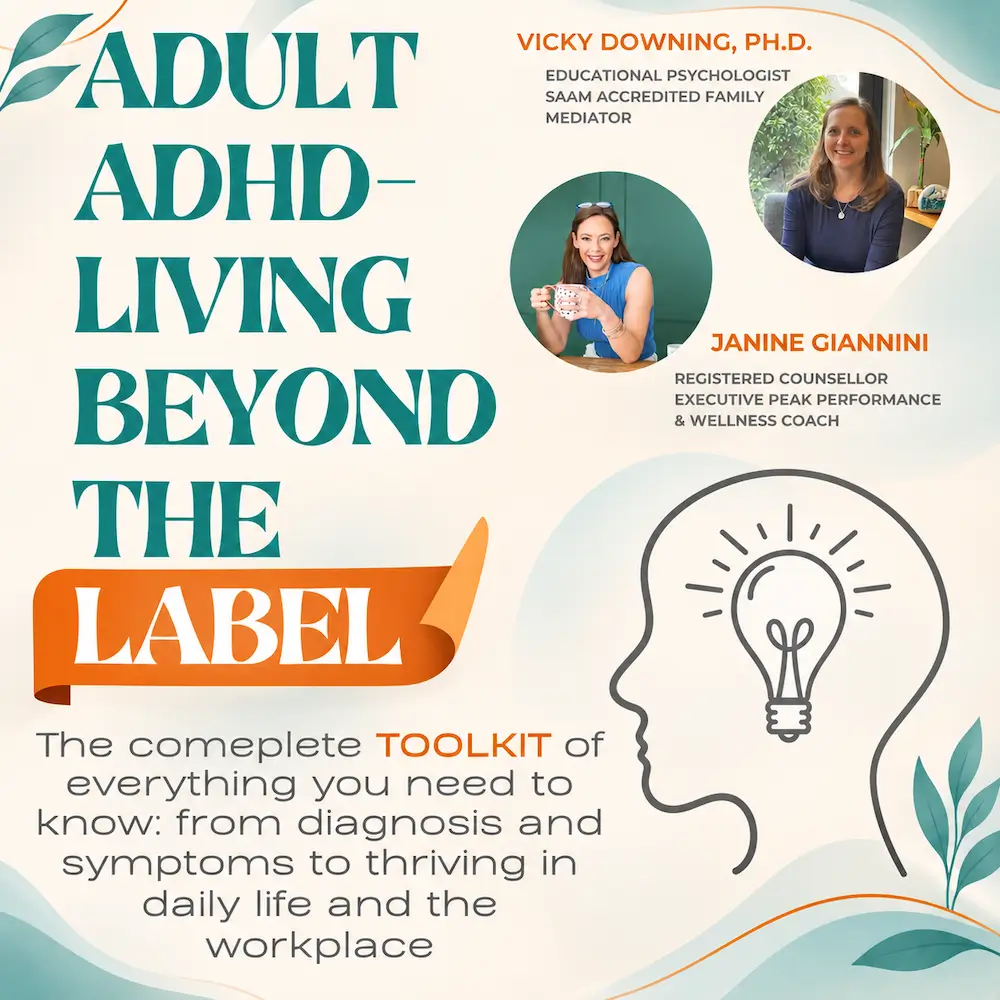
This two-day workshop bridges the gap between theory and practice. Drawing on current research and clinical best practice, we move from the neurobiology and diagnostic picture, through differential diagnosis, screening and the lived experience of ADHD, to treatment options and a practical, whole-person framework for helping clients thrive, not just manage a diagnosis. Whether you are seeing more ADHD presentations, want to specialise, or simply need to update your knowledge, you will leave equipped to provide competent, compassionate, evidence-based care.
New and expanded for 2027: In response to feedback on our original workshop, the programme has grown from one day to two. It now includes dedicated ethics sessions on working with ADHD clients, a session on accommodations for adults, case studies, and practical components that demonstrate how to apply the course material in your own practice.
Course Information
| Format | Two-day online workshop (12 CPD hours) |
|---|---|
| Live Dates | 12 and 13 March 2027, 9am – 4pm SAST |
| Delivery | Online — live via Zoom |
| Presented by | Dr Vicky Downing (Educational Psychologist & SAAM Accredited Family Mediator) Janine Giannini (HPCSA Registered Counsellor & Executive Peak Performance & Wellness Coach) |
| HPCSA CPD Points | 12 CPD points: 10 Clinical points + 2 Ethics points (applied for) |
| Available Until | 30 November 2027 — recording, CPD points, and all materials remain available |
| Important Note | If you cannot attend the live sessions, the full recording and all materials are still available to you. CPD points available until 30 November 2027. |
Who is this for:
- Psychologists
- Registered Counsellors
- Clinical Social Workers
- Occupational therapists
What will you learn:
- Recognise how ADHD presents in adults, including in women and in high-achieving or masking clients
- Apply diagnostic criteria and distinguish ADHD from common co-morbid and look-alike conditions
- Use screening tools such as the ASRS and CAARS, with a clear understanding of their limits
- Understand the neurobiology and whole-body health picture of ADHD
- Outline the treatment options for adults, and the risks of leaving ADHD untreated
- Use the Six Cornerstones framework and practical strategies to help clients thrive, not only cope
- Support clients in applying for accommodations in study and other settings
- Practise ethically in assessment, diagnosis and treatment, including professional boundaries, countertransference, inclusivity and the use of AI
- Apply the course material through case studies and practical exercises
What the two days cover
Day 1: Recognising and understanding ADHD
- Myths, the iceberg of invisible symptoms and diagnostic foundations
- Risk factors and ADHD across the lifespan
- Diagnosis , masking, overdiagnosis, underdiagnosis and misdiagnosis
- Co-morbidity, differential diagnosis and screening
- Women and ADHD, including hormonal influences
- Ethics A: ethical assessment, client-centred care and inclusivity (new)
- Lived experience: daily living, relationships, trauma, work and burnout
- Guided regulation exercise (new)
Day 2: Treating ADHD and thriving
- Brain and body: neurobiology, gut, inflammation and health
- Risks of untreated ADHD and treatment options
- The positives of ADHD and moving from fixing to thriving
- How BWRT and Brain Spotting can be used with ADHD clients (new)
- The Six Cornerstones of ADHD Self Care (framework) to implement with ADHD clients
- Case studies (new)
- Accommodations for study and other settings (new)
- Ethics B: evidence-based treatments, boundaries, countertransference and the ethical use of AI (new)
Additional Materials:
- Presentation summary: key clinical points and research references
- Assessment and screening tools: resources for clinical practice
- Therapeutic intervention toolkit: evidence-based strategies and client handouts
- Six Cornerstones worksheet: for implementing the framework with clients
- Guided regulation exercise script: for practitioners to use with clients
R2750
Need help?
Click here to contact me for assistance.
Reviews